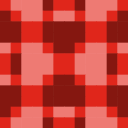
Unified Pattern — Triple — without YANG, hexagram 29 (Ge, Revolution — King Wen no. 49)
One of 256 distinct Unified Patterns — a 12×12 Jacquard construction where every cell's colour is read off a single hexagram of the Yi King, hexagram Ge, Revolution. Binary numbering 0–63; in brackets, the traditional King Wen number.
Family Triple — without YANG, one of the 8 admissible families (out of 15) in the system's classification — see the lexicon for how families are built and admitted.
The pattern's three colour classes, set independently — change one, the other two stay put.
One tint, read in light and dark — a luminance reading, not three colours with two greyed out.
Reading the cell, line by line
The 144 cells of the 12×12 cell fall into six levels of 24 cells, one per line of the hexagram. Where the line is solid (yang), the level takes its colours from the family's YANG grid; where it is broken (yin), from its YANG mutant grid. Count of each colour, level by level:
| Level | Line | Grid read | Colour 1 (violet) | Colour 2 (magenta) | Colour 3 (orange) |
|---|---|---|---|---|---|
| 1 | solid | YANG | 8 | 8 | 8 |
| 2 | broken | YANG mutant | 8 | 8 | 8 |
| 3 | solid | YANG | 8 | 8 | 8 |
| 4 | solid | YANG | 8 | 8 | 8 |
| 5 | solid | YANG | 8 | 8 | 8 |
| 6 | broken | YANG mutant | 8 | 8 | 8 |
| Whole cell | 48 | 48 | 48 | ||
The three colours are exactly balanced: 48 cells each. The cell is unchanged by reflection in the diagonal, a half turn.
Hexagram 29 (King Wen no. 49) — Revolution
Upper trigram ☱ Dui (The Joyous, the Lake); lower trigram ☲ Li (That Which Clings, Fire).
Image
Within the Lake, Fire: the image of revolution. Flame burns beneath the water's surface, two natures that cannot coexist without one eventually transforming the other — a confrontation that necessarily leads to a change of state. Thus the noble one sets the calendar in order and makes the seasons clear: true revolution does not destroy for destruction's sake, it reorders what the old time had left confused.
Judgement — Momentum
The fire beneath the lake dissolves the old skin. Every deep change first requires the old form to dissolve, however uncomfortable that moment of transition may be. This line says the rightest revolution is never gratuitous — it answers a necessity the old form could no longer contain.
The full hexagram page: the six lines, its magic square and the other patterns built on it.
Same shape, other colourings
Two involutions leave this motif's shape unchanged and only permute its three tints — verified across every family and every hexagram in the corpus, not just this one: swapping the pairing used to read the hexagram (YANG/YANG-mutant ↔ YIN/YIN-mutant), and taking the hexagram's binary complement (63 − 29 = 34). Toggle them below; the tiling never changes, only the colours do.
The grid itself
The 12×12 layer map and the three colour grids above, in the raw data — human-readable, and machine-readable as JSON.
Show the data
{
 "famille": "par3:sans_yang",
 "hexagramme": 29,
 "complement_binaire": 34,
 "layer_of": [
  [
   1,
   1,
   3,
   4,
   6,
   6,
   6,
   6,
   4,
   3,
   1,
   1
  ],
  [
   1,
   2,
   2,
   5,
   5,
   6,
   6,
   5,
   5,
   2,
   2,
   1
  ],
  [
   3,
   2,
   3,
   4,
   5,
   4,
   4,
   5,
   4,
   3,
   2,
   3
  ],
  [
   4,
   5,
   4,
   3,
   2,
   3,
   3,
   2,
   3,
   4,
   5,
   4
  ],
  [
   6,
   5,
   5,
   2,
   2,
   1,
   1,
   2,
   2,
   5,
   5,
   6
  ],
  [
   6,
   6,
   4,
   3,
   1,
   1,
   1,
   1,
   3,
   4,
   6,
   6
  ],
  [
   6,
   6,
   4,
   3,
   1,
   1,
   1,
   1,
   3,
   4,
   6,
   6
  ],
  [
   6,
   5,
   5,
   2,
   2,
   1,
   1,
   2,
   2,
   5,
   5,
   6
  ],
  [
   4,
   5,
   4,
   3,
   2,
   3,
   3,
   2,
   3,
   4,
   5,
   4
  ],
  [
   3,
   2,
   3,
   4,
   5,
   4,
   4,
   5,
   4,
   3,
   2,
   3
  ],
  [
   1,
   2,
   2,
   5,
   5,
   6,
   6,
   5,
   5,
   2,
   2,
   1
  ],
  [
   1,
   1,
   3,
   4,
   6,
   6,
   6,
   6,
   4,
   3,
   1,
   1
  ]
 ],
 "grille_polarite_yang": [
  [
   "O",
   "V",
   "V",
   "M",
   "V",
   "O",
   "O",
   "M",
   "V",
   "M",
   "M",
   "O"
  ],
  [
   "V",
   "O",
   "M",
   "M",
   "O",
   "M",
   "V",
   "O",
   "V",
   "V",
   "O",
   "M"
  ],
  [
   "V",
   "M",
   "O",
   "O",
   "V",
   "V",
   "M",
   "M",
   "O",
   "O",
   "V",
   "M"
  ],
  [
   "M",
   "M",
   "O",
   "O",
   "V",
   "M",
   "V",
   "M",
   "O",
   "O",
   "V",
   "V"
  ],
  [
   "V",
   "O",
   "V",
   "V",
   "O",
   "M",
   "V",
   "O",
   "M",
   "M",
   "O",
   "M"
  ],
  [
   "O",
   "M",
   "V",
   "M",
   "M",
   "O",
   "O",
   "V",
   "V",
   "M",
   "V",
   "O"
  ],
  [
   "O",
   "V",
   "M",
   "V",
   "V",
   "O",
   "O",
   "M",
   "M",
   "V",
   "M",
   "O"
  ],
  [
   "M",
   "O",
   "M",
   "M",
   "O",
   "V",
   "M",
   "O",
   "V",
   "V",
   "O",
   "V"
  ],
  [
   "V",
   "V",
   "O",
   "O",
   "M",
   "V",
   "M",
   "V",
   "O",
   "O",
   "M",
   "M"
  ],
  [
   "M",
   "V",
   "O",
   "O",
   "M",
   "M",
   "V",
   "V",
   "O",
   "O",
   "M",
   "V"
  ],
  [
   "M",
   "O",
   "V",
   "V",
   "O",
   "V",
   "M",
   "O",
   "M",
   "M",
   "O",
   "V"
  ],
  [
   "O",
   "M",
   "M",
   "V",
   "M",
   "O",
   "O",
   "V",
   "M",
   "V",
   "V",
   "O"
  ]
 ],
 "grille_polarite_yin": [
  [
   "M",
   "O",
   "O",
   "V",
   "O",
   "M",
   "M",
   "V",
   "O",
   "V",
   "V",
   "M"
  ],
  [
   "O",
   "M",
   "V",
   "V",
   "M",
   "V",
   "O",
   "M",
   "O",
   "O",
   "M",
   "V"
  ],
  [
   "O",
   "V",
   "M",
   "M",
   "O",
   "O",
   "V",
   "V",
   "M",
   "M",
   "O",
   "V"
  ],
  [
   "V",
   "V",
   "M",
   "M",
   "O",
   "V",
   "O",
   "V",
   "M",
   "M",
   "O",
   "O"
  ],
  [
   "O",
   "M",
   "O",
   "O",
   "M",
   "V",
   "O",
   "M",
   "V",
   "V",
   "M",
   "V"
  ],
  [
   "M",
   "V",
   "O",
   "V",
   "V",
   "M",
   "M",
   "O",
   "O",
   "V",
   "O",
   "M"
  ],
  [
   "M",
   "O",
   "V",
   "O",
   "O",
   "M",
   "M",
   "V",
   "V",
   "O",
   "V",
   "M"
  ],
  [
   "V",
   "M",
   "V",
   "V",
   "M",
   "O",
   "V",
   "M",
   "O",
   "O",
   "M",
   "O"
  ],
  [
   "O",
   "O",
   "M",
   "M",
   "V",
   "O",
   "V",
   "O",
   "M",
   "M",
   "V",
   "V"
  ],
  [
   "V",
   "O",
   "M",
   "M",
   "V",
   "V",
   "O",
   "O",
   "M",
   "M",
   "V",
   "O"
  ],
  [
   "V",
   "M",
   "O",
   "O",
   "M",
   "O",
   "V",
   "M",
   "V",
   "V",
   "M",
   "O"
  ],
  [
   "M",
   "V",
   "V",
   "O",
   "V",
   "M",
   "M",
   "O",
   "V",
   "O",
   "O",
   "M"
  ]
 ],
 "grille_complement": [
  [
   "O",
   "M",
   "M",
   "V",
   "M",
   "O",
   "O",
   "V",
   "M",
   "V",
   "V",
   "O"
  ],
  [
   "M",
   "O",
   "V",
   "V",
   "O",
   "V",
   "M",
   "O",
   "M",
   "M",
   "O",
   "V"
  ],
  [
   "M",
   "V",
   "O",
   "O",
   "M",
   "M",
   "V",
   "V",
   "O",
   "O",
   "M",
   "V"
  ],
  [
   "V",
   "V",
   "O",
   "O",
   "M",
   "V",
   "M",
   "V",
   "O",
   "O",
   "M",
   "M"
  ],
  [
   "M",
   "O",
   "M",
   "M",
   "O",
   "V",
   "M",
   "O",
   "V",
   "V",
   "O",
   "V"
  ],
  [
   "O",
   "V",
   "M",
   "V",
   "V",
   "O",
   "O",
   "M",
   "M",
   "V",
   "M",
   "O"
  ],
  [
   "O",
   "M",
   "V",
   "M",
   "M",
   "O",
   "O",
   "V",
   "V",
   "M",
   "V",
   "O"
  ],
  [
   "V",
   "O",
   "V",
   "V",
   "O",
   "M",
   "V",
   "O",
   "M",
   "M",
   "O",
   "M"
  ],
  [
   "M",
   "M",
   "O",
   "O",
   "V",
   "M",
   "V",
   "M",
   "O",
   "O",
   "V",
   "V"
  ],
  [
   "V",
   "M",
   "O",
   "O",
   "V",
   "V",
   "M",
   "M",
   "O",
   "O",
   "V",
   "M"
  ],
  [
   "V",
   "O",
   "M",
   "M",
   "O",
   "M",
   "V",
   "O",
   "V",
   "V",
   "O",
   "M"
  ],
  [
   "O",
   "V",
   "V",
   "M",
   "V",
   "O",
   "O",
   "M",
   "V",
   "M",
   "M",
   "O"
  ]
 ]
}
Neighbouring motifs
The previous and next hexagram within the same family, Triple — without YANG.