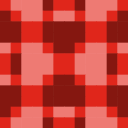
Unified Pattern — Triple — without YANG mutant, hexagram 3 (Lin, Approach — King Wen no. 19)
One of 256 distinct Unified Patterns — a 12×12 Jacquard construction where every cell's colour is read off a single hexagram of the Yi King, hexagram Lin, Approach. Binary numbering 0–63; in brackets, the traditional King Wen number.
Family Triple — without YANG mutant, one of the 8 admissible families (out of 15) in the system's classification — see the lexicon for how families are built and admitted.
The pattern's three colour classes, set independently — change one, the other two stay put.
One tint, read in light and dark — a luminance reading, not three colours with two greyed out.
Reading the cell, line by line
The 144 cells of the 12×12 cell fall into six levels of 24 cells, one per line of the hexagram. Where the line is solid (yang), the level takes its colours from the family's YANG grid; where it is broken (yin), from its YANG mutant grid. Count of each colour, level by level:
| Level | Line | Grid read | Colour 1 (violet) | Colour 2 (magenta) | Colour 3 (orange) |
|---|---|---|---|---|---|
| 1 | solid | YANG | 8 | 8 | 8 |
| 2 | solid | YANG | 8 | 8 | 8 |
| 3 | broken | YANG mutant | 8 | 8 | 8 |
| 4 | broken | YANG mutant | 8 | 8 | 8 |
| 5 | broken | YANG mutant | 8 | 8 | 8 |
| 6 | broken | YANG mutant | 8 | 8 | 8 |
| Whole cell | 48 | 48 | 48 | ||
The three colours are exactly balanced: 48 cells each. The cell is unchanged by a quarter turn, a half turn.
Hexagram 3 (King Wen no. 19) — Approach
Upper trigram ☷ Kun (The Receptive, the Earth); lower trigram ☱ Dui (The Joyous, the Lake).
Image
Above the Lake, the Earth: the image of approach. The earth leans toward the water, drawing near without ever fully dominating it — a movement of gradual approach, never abrupt. This is the figure of benevolence that advances step by step. Thus the noble one teaches without tiring and embraces the people without limit: truly approaching someone requires this patience that never forces the encounter.
Judgement — Growth
The benevolent approach of living forces spurs a patient rise. Nothing great is ever won all at once; everything that truly grows does so through successive approaches, each preparing the next. This line teaches that authentic growth is measured in steps, not leaps.
The full hexagram page: the six lines, its magic square and the other patterns built on it.
Same shape, other colourings
Two involutions leave this motif's shape unchanged and only permute its three tints — verified across every family and every hexagram in the corpus, not just this one: swapping the pairing used to read the hexagram (YANG/YANG-mutant ↔ YIN/YIN-mutant), and taking the hexagram's binary complement (63 − 3 = 60). Toggle them below; the tiling never changes, only the colours do.
The grid itself
The 12×12 layer map and the three colour grids above, in the raw data — human-readable, and machine-readable as JSON.
Show the data
{
 "famille": "par3:sans_yang_mut",
 "hexagramme": 3,
 "complement_binaire": 60,
 "layer_of": [
  [
   1,
   1,
   3,
   4,
   6,
   6,
   6,
   6,
   4,
   3,
   1,
   1
  ],
  [
   1,
   2,
   2,
   5,
   5,
   6,
   6,
   5,
   5,
   2,
   2,
   1
  ],
  [
   3,
   2,
   3,
   4,
   5,
   4,
   4,
   5,
   4,
   3,
   2,
   3
  ],
  [
   4,
   5,
   4,
   3,
   2,
   3,
   3,
   2,
   3,
   4,
   5,
   4
  ],
  [
   6,
   5,
   5,
   2,
   2,
   1,
   1,
   2,
   2,
   5,
   5,
   6
  ],
  [
   6,
   6,
   4,
   3,
   1,
   1,
   1,
   1,
   3,
   4,
   6,
   6
  ],
  [
   6,
   6,
   4,
   3,
   1,
   1,
   1,
   1,
   3,
   4,
   6,
   6
  ],
  [
   6,
   5,
   5,
   2,
   2,
   1,
   1,
   2,
   2,
   5,
   5,
   6
  ],
  [
   4,
   5,
   4,
   3,
   2,
   3,
   3,
   2,
   3,
   4,
   5,
   4
  ],
  [
   3,
   2,
   3,
   4,
   5,
   4,
   4,
   5,
   4,
   3,
   2,
   3
  ],
  [
   1,
   2,
   2,
   5,
   5,
   6,
   6,
   5,
   5,
   2,
   2,
   1
  ],
  [
   1,
   1,
   3,
   4,
   6,
   6,
   6,
   6,
   4,
   3,
   1,
   1
  ]
 ],
 "grille_polarite_yang": [
  [
   "O",
   "V",
   "M",
   "V",
   "V",
   "O",
   "O",
   "M",
   "M",
   "V",
   "M",
   "O"
  ],
  [
   "M",
   "O",
   "V",
   "V",
   "O",
   "V",
   "M",
   "O",
   "M",
   "M",
   "O",
   "V"
  ],
  [
   "V",
   "M",
   "O",
   "O",
   "V",
   "V",
   "M",
   "M",
   "O",
   "O",
   "V",
   "M"
  ],
  [
   "M",
   "M",
   "O",
   "O",
   "V",
   "M",
   "V",
   "M",
   "O",
   "O",
   "V",
   "V"
  ],
  [
   "M",
   "O",
   "M",
   "M",
   "O",
   "V",
   "M",
   "O",
   "V",
   "V",
   "O",
   "V"
  ],
  [
   "O",
   "M",
   "M",
   "V",
   "M",
   "O",
   "O",
   "V",
   "M",
   "V",
   "V",
   "O"
  ],
  [
   "O",
   "V",
   "V",
   "M",
   "V",
   "O",
   "O",
   "M",
   "V",
   "M",
   "M",
   "O"
  ],
  [
   "V",
   "O",
   "V",
   "V",
   "O",
   "M",
   "V",
   "O",
   "M",
   "M",
   "O",
   "M"
  ],
  [
   "V",
   "V",
   "O",
   "O",
   "M",
   "V",
   "M",
   "V",
   "O",
   "O",
   "M",
   "M"
  ],
  [
   "M",
   "V",
   "O",
   "O",
   "M",
   "M",
   "V",
   "V",
   "O",
   "O",
   "M",
   "V"
  ],
  [
   "V",
   "O",
   "M",
   "M",
   "O",
   "M",
   "V",
   "O",
   "V",
   "V",
   "O",
   "M"
  ],
  [
   "O",
   "M",
   "V",
   "M",
   "M",
   "O",
   "O",
   "V",
   "V",
   "M",
   "V",
   "O"
  ]
 ],
 "grille_polarite_yin": [
  [
   "M",
   "O",
   "V",
   "O",
   "O",
   "M",
   "M",
   "V",
   "V",
   "O",
   "V",
   "M"
  ],
  [
   "V",
   "M",
   "O",
   "O",
   "M",
   "O",
   "V",
   "M",
   "V",
   "V",
   "M",
   "O"
  ],
  [
   "O",
   "V",
   "M",
   "M",
   "O",
   "O",
   "V",
   "V",
   "M",
   "M",
   "O",
   "V"
  ],
  [
   "V",
   "V",
   "M",
   "M",
   "O",
   "V",
   "O",
   "V",
   "M",
   "M",
   "O",
   "O"
  ],
  [
   "V",
   "M",
   "V",
   "V",
   "M",
   "O",
   "V",
   "M",
   "O",
   "O",
   "M",
   "O"
  ],
  [
   "M",
   "V",
   "V",
   "O",
   "V",
   "M",
   "M",
   "O",
   "V",
   "O",
   "O",
   "M"
  ],
  [
   "M",
   "O",
   "O",
   "V",
   "O",
   "M",
   "M",
   "V",
   "O",
   "V",
   "V",
   "M"
  ],
  [
   "O",
   "M",
   "O",
   "O",
   "M",
   "V",
   "O",
   "M",
   "V",
   "V",
   "M",
   "V"
  ],
  [
   "O",
   "O",
   "M",
   "M",
   "V",
   "O",
   "V",
   "O",
   "M",
   "M",
   "V",
   "V"
  ],
  [
   "V",
   "O",
   "M",
   "M",
   "V",
   "V",
   "O",
   "O",
   "M",
   "M",
   "V",
   "O"
  ],
  [
   "O",
   "M",
   "V",
   "V",
   "M",
   "V",
   "O",
   "M",
   "O",
   "O",
   "M",
   "V"
  ],
  [
   "M",
   "V",
   "O",
   "V",
   "V",
   "M",
   "M",
   "O",
   "O",
   "V",
   "O",
   "M"
  ]
 ],
 "grille_complement": [
  [
   "O",
   "M",
   "V",
   "M",
   "M",
   "O",
   "O",
   "V",
   "V",
   "M",
   "V",
   "O"
  ],
  [
   "V",
   "O",
   "M",
   "M",
   "O",
   "M",
   "V",
   "O",
   "V",
   "V",
   "O",
   "M"
  ],
  [
   "M",
   "V",
   "O",
   "O",
   "M",
   "M",
   "V",
   "V",
   "O",
   "O",
   "M",
   "V"
  ],
  [
   "V",
   "V",
   "O",
   "O",
   "M",
   "V",
   "M",
   "V",
   "O",
   "O",
   "M",
   "M"
  ],
  [
   "V",
   "O",
   "V",
   "V",
   "O",
   "M",
   "V",
   "O",
   "M",
   "M",
   "O",
   "M"
  ],
  [
   "O",
   "V",
   "V",
   "M",
   "V",
   "O",
   "O",
   "M",
   "V",
   "M",
   "M",
   "O"
  ],
  [
   "O",
   "M",
   "M",
   "V",
   "M",
   "O",
   "O",
   "V",
   "M",
   "V",
   "V",
   "O"
  ],
  [
   "M",
   "O",
   "M",
   "M",
   "O",
   "V",
   "M",
   "O",
   "V",
   "V",
   "O",
   "V"
  ],
  [
   "M",
   "M",
   "O",
   "O",
   "V",
   "M",
   "V",
   "M",
   "O",
   "O",
   "V",
   "V"
  ],
  [
   "V",
   "M",
   "O",
   "O",
   "V",
   "V",
   "M",
   "M",
   "O",
   "O",
   "V",
   "M"
  ],
  [
   "M",
   "O",
   "V",
   "V",
   "O",
   "V",
   "M",
   "O",
   "M",
   "M",
   "O",
   "V"
  ],
  [
   "O",
   "V",
   "M",
   "V",
   "V",
   "O",
   "O",
   "M",
   "M",
   "V",
   "M",
   "O"
  ]
 ]
}
Neighbouring motifs
The previous and next hexagram within the same family, Triple — without YANG mutant.